
The way we move through the world is quietly changing. Not with a dramatic shift overnight, but through small, deliberate choices—walking a little more, choosing a train instead of a flight, or swapping a car ride for a bicycle. These decisions, taken individually, may seem insignificant. But together, they shape a new rhythm of travel—one that’s gentler on the planet and, often, more rewarding for us.
Eco-friendly transportation options are no longer limited to niche communities or idealistic travelers. They’re becoming part of everyday life, woven into how cities function and how people think about movement. And the beauty of it is this: sustainability doesn’t have to feel restrictive. In many cases, it feels like freedom.
Rethinking the way we move
For decades, convenience has been the guiding principle behind transportation choices. Faster routes, shorter travel times, and personal comfort often outweighed environmental concerns. But that mindset is shifting. There’s a growing awareness that how we travel directly affects air quality, urban congestion, and even the pace of life itself.
Eco-friendly transportation options invite us to rethink not just how we move, but why. Is speed always necessary? Does every journey require a private vehicle? These questions open the door to alternatives that are not only sustainable but, in many cases, more enriching.
Walking as the most natural choice
There’s something quietly transformative about walking. It slows you down just enough to notice your surroundings—the texture of a street, the rhythm of a neighborhood, the subtle changes in light throughout the day.
As one of the simplest eco-friendly transportation options, walking requires no fuel, produces no emissions, and fits seamlessly into daily life. It’s also deeply personal. A walk through a familiar route can feel entirely different depending on your mood, the weather, or even the time of day.
In urban environments, walking often becomes the most practical choice for short distances. It eliminates the stress of traffic and parking, replacing it with a sense of ease that’s hard to replicate in a vehicle.
Cycling and the quiet efficiency of two wheels
Cycling occupies a unique space between speed and simplicity. It offers the efficiency of mechanized travel while maintaining a close connection to the environment.
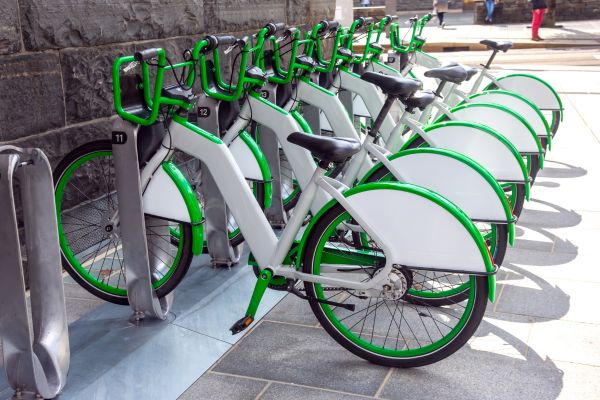
Cities around the world are gradually adapting to accommodate cyclists, with dedicated lanes and bike-sharing systems becoming more common. For many commuters, cycling isn’t just an eco-friendly alternative—it’s a more predictable one. No traffic jams, no fuel costs, and a consistent travel time that rarely fluctuates.
There’s also an understated joy in cycling. The steady motion, the wind against your face, the sense of covering distance under your own power—it all adds up to an experience that feels both practical and liberating.
Public transport and shared movement
Buses, trains, trams, and subways form the backbone of sustainable urban mobility. Public transport represents one of the most impactful eco-friendly transportation options simply because it moves many people at once, reducing the number of individual vehicles on the road.
There’s a certain rhythm to public transport. The predictable stops, the flow of passengers, the quiet moments spent looking out of a window—it creates a shared experience that’s often overlooked. While it may lack the privacy of a car, it offers something else: a sense of collective movement.
In well-connected cities, public transport becomes more than a necessity. It becomes a reliable, even preferred, way to navigate daily life without contributing heavily to environmental strain.
Electric vehicles and the shift in personal mobility
Electric vehicles are often seen as the bridge between traditional driving and a more sustainable future. They retain the familiarity of private transport while reducing emissions significantly, especially when powered by renewable energy sources.
The appeal of electric vehicles lies in their balance. They offer convenience without the same environmental cost associated with conventional fuel-based cars. Quiet operation, lower maintenance needs, and evolving infrastructure all contribute to their growing presence on the roads.
Still, they’re part of a broader conversation. While they reduce emissions, they don’t entirely solve issues like congestion or urban space usage. As eco-friendly transportation options go, they’re an important step—but not the only one.
Carpooling and the value of shared journeys
There’s a simple logic behind carpooling: fewer cars, fewer emissions. But beyond that, it introduces a social dimension to travel that’s often missing in solo commutes.
Sharing a ride can transform an otherwise routine journey into something more engaging. Conversations unfold, perspectives are exchanged, and time feels less like something to be endured and more like something to be shared.
In practical terms, carpooling reduces fuel consumption and traffic density. It’s a small adjustment with a noticeable impact, particularly in areas where public transport options are limited.
Rail travel and long-distance sustainability
When it comes to longer journeys, trains stand out as one of the most efficient eco-friendly transportation options available. Compared to air travel or long car trips, rail systems tend to produce significantly lower emissions per passenger.
There’s also an undeniable charm to train travel. The gradual unfolding of landscapes, the ability to move around freely, the absence of the rigid procedures associated with airports—it all contributes to a more relaxed experience.
Choosing rail over short-haul flights, when possible, is one of the more impactful decisions travelers can make. It aligns convenience with sustainability in a way that feels both practical and enjoyable.
Micromobility and short-distance innovation
In recent years, micromobility solutions like electric scooters and shared bikes have emerged as flexible, low-impact ways to cover short distances. They fill the gaps between walking and public transport, offering a convenient option for quick trips across a city.
These modes are particularly effective in dense urban areas, where traffic congestion and limited parking make traditional vehicles less practical. They’re easy to access, simple to use, and often integrated into broader transport systems.
While they may seem like a small addition, micromobility plays a meaningful role in expanding eco-friendly transportation options, especially for last-mile connectivity.
The role of infrastructure and urban design
Sustainable transportation doesn’t exist in isolation. It relies heavily on how cities are designed and how infrastructure supports different modes of travel.
Wide sidewalks, protected bike lanes, efficient public transit networks—these elements don’t just encourage eco-friendly choices; they make them viable. Without the right infrastructure, even the most environmentally conscious options can feel inconvenient or inaccessible.
Urban planning that prioritizes sustainability tends to create environments where eco-friendly transportation options are not only available but intuitive. People naturally gravitate toward them because they make sense within the structure of the city.
Balancing convenience and responsibility
One of the challenges in adopting eco-friendly transportation options is finding a balance between personal convenience and environmental responsibility. Life doesn’t always allow for ideal choices. There are moments when speed, comfort, or necessity take precedence.
But sustainability isn’t about perfection. It’s about patterns. Choosing a greener option when it’s practical, adjusting habits gradually, and remaining mindful of the impact of those choices.
Over time, these small shifts accumulate. What once felt like an effort becomes routine, and what was once considered an alternative becomes the default.
A changing relationship with travel
Perhaps the most interesting aspect of this shift is how it changes our relationship with travel itself. When we slow down, when we share journeys, when we engage more directly with our surroundings, travel becomes less transactional and more experiential.
Eco-friendly transportation options encourage this shift. They invite us to see movement not just as a means to an end, but as part of the experience. A walk becomes an exploration. A train ride becomes a narrative. Even a shared commute carries a sense of connection.
Conclusion: moving forward with intention
The conversation around eco-friendly transportation options isn’t just about reducing emissions or conserving resources. It’s about redefining how we think about movement—making it more thoughtful, more connected, and ultimately more sustainable.
There’s no single solution that fits every situation. Instead, there’s a spectrum of choices, each with its own advantages and limitations. Walking, cycling, public transport, shared rides, electric vehicles—all of them contribute to a broader shift toward responsible mobility.
And maybe that’s the key. Not a dramatic overhaul, but a series of intentional decisions. Choosing differently when we can. Paying attention to how we move and why it matters.
Because in the end, the journey itself is part of the story—and how we choose to travel shapes not just our destinations, but the world we move through.