
A national park trip can be the family vacation everyone remembers, but not because you covered the most miles. Children often remember the chipmunk near the picnic table, their first waterfall, or the ranger who answered a hundred questions. The best family friendly national park vacations make room for those moments instead of treating the park like a sightseeing checklist.
Across the United States, national parks offer coastlines, mountains, forests, deserts, and remarkable wildlife. The trick is choosing a destination and daily rhythm that fit your children’s ages and comfort outdoors.
Choose a Park for Your Children, Not Just the Photos
Start with the experiences your family enjoys. A preschooler who loves creeks may prefer a wooded valley to a challenging mountain trail. Older children might be excited by fossils, geysers, or a hike with a clear destination.
Consider driving distance, temperatures, elevation, restrooms, and how far major sights sit from one another. A magnificent park with hours of driving between attractions can exhaust young passengers. For a first family park trip, two or three nights near one main area may work better than racing through multiple parks.
National Parks With Kids: Four Different Experiences
Great Smoky Mountains: Forest Walks and Streams
Great Smoky Mountains National Park is a welcoming choice for families who enjoy green landscapes and woodland outings. The paved, half-mile Sugarlands Valley Nature Trail offers a manageable introduction near Sugarlands Visitor Center. Look for birds, listen to flowing water, and let younger children set the pace.
Yosemite: Big Scenery Without a Big Hike
Yosemite’s Lower Yosemite Fall Trail is an approximately one-mile loop with impressive views for relatively modest effort. Its eastern section is generally accessible when conditions permit. Waterfall flow changes seasonally, so check current conditions rather than promising children a roaring cascade year-round.
Acadia: Ocean Views and Flexible Walks
At Acadia National Park in Maine, families can combine coastal overlooks with selected stretches of carriage roads. Jordan Pond is beautiful, but its complete shoreline loop includes uneven rocks and boardwalks; it is not necessarily an easy stroller outing. Choose a comfortable section instead of committing to the entire loop.
Yellowstone: Wildlife and Geothermal Wonders
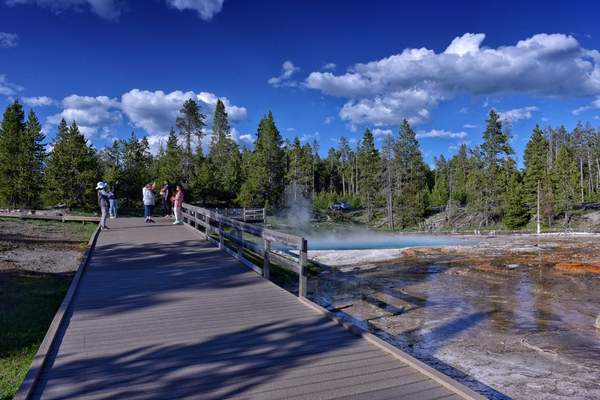
Yellowstone suits curious school-age children who love spotting animals and seeing unusual landscapes. Geyser basins are unforgettable, but hot ground and water make supervision essential. Stay on designated boardwalks, and expect slow driving and possible wildlife-related traffic delays.
Build Each Day Around One Main Adventure
A family outdoor vacation becomes easier when the schedule has one must-do activity, one optional stop, and open time. Start early when weather and crowds make that sensible. Eat lunch before everyone becomes exhausted, and save a scenic drive or visitor center for the afternoon.
For example, a family visiting Yosemite with a six-year-old and a nine-year-old might walk Lower Yosemite Fall in the morning, enjoy a packed lunch, and sketch granite cliffs afterward. If someone needs a nap, nothing important has been lost. A second ambitious hike would probably add less joy than an unhurried afternoon.
Build in a flexible day after long travel. Children may need to adjust to an unfamiliar bed, altitude, or temperature before longer outings.
Find Kid Friendly Hikes That Actually Feel Fun
Trail mileage tells only part of the story. Check elevation gain, surface conditions, exposed edges, shade, and whether the route is out-and-back or a loop. A short rocky climb can be harder for little legs than a longer paved stroll. Read the park’s official trail description and alerts before leaving.
Give each child a job: spotting trail markers, counting birds, or choosing a place to pause. A nature scavenger hunt can transform a slow walk into an expedition. Our easy hiking games for children offer more ideas for keeping everyone engaged.
Carry drinking water, snacks, sun protection, weather-appropriate layers, first-aid supplies, and an offline map. Wear comfortable shoes. Turn around before the youngest hiker is exhausted; the return journey still counts.
Make Wildlife Safety a Family Rule
Wild animals are not photo props. The National Park Service advises keeping substantial distances from animals, often at least 25 yards from most wildlife and 100 yards from bears or wolves; individual parks can require different distances. Yellowstone requires 25 yards from bison and elk and 100 yards from bears, wolves, and cougars.
Teach children to watch through binoculars, never feed animals, and move away if an animal approaches. Store food as the park directs. At Yellowstone’s thermal areas, keep children beside you and stay on boardwalks. At waterfalls and rivers, avoid slippery rocks and fast-moving water.
Read the official park safety page together before departure. Simple rules are easier to follow than a hurried warning at the trailhead.
Plan Lodging, Meals, and Rest Stops Before Arrival
For toddlers, a room or cabin with bathroom access and a refrigerator may be more practical than a remote campsite. Camping can be wonderful, but confirm restroom facilities, nighttime temperatures, food-storage rules, and reservation requirements.
Book early during school holidays. Accommodation outside a park may offer more choice, but calculate the drive to your trailheads. A cheaper room can feel expensive when it adds hours in the car each day.
Pack familiar breakfasts, refillable bottles, and lunches that travel well. Check where groceries and water are available; services can be limited or seasonal. Keep emergency snacks accessible. A family road trip packing list helps prevent the last-minute scramble for rain jackets and spare clothes.
Check Entry Rules and Add a Ranger Activity
Visit the official National Park Service website shortly before departure. Confirm entrance fees, road closures, shuttle schedules, parking, permits, and any entry reservations. Rules change, and a park entrance fee does not guarantee access to every activity.
Many parks offer Junior Ranger activities, often using a booklet completed during the visit. Ask at the visitor center about current programs and badges. For overall costs, our budget-friendly family vacation planning guide can help with meals, lodging, and driving expenses.
Frequently Asked Questions
What age is best for a national park vacation?
There is no perfect age. Toddlers can enjoy overlooks and short paths; school-age children may appreciate Junior Ranger programs and longer walks. Match activities to your child’s abilities.
How many days should a family spend in one national park?
Two to four days works for many first visits, although large parks may deserve longer. Account for travel time and build in slower days.
Are strollers useful in national parks?
They help on suitable paved paths, but many trails have steps, rocks, roots, or steep sections. Check specific accessibility information and consider a child carrier where appropriate.
How can families avoid crowds?
Visit popular viewpoints early when practical, travel outside peak periods if possible, and keep alternative trails ready. Follow current guidance on parking and shuttle use.
Give the Trip Room to Surprise You
The most successful national parks with kids itineraries leave time for small discoveries. Choose a manageable home base, plan a few memorable experiences, and protect everyone’s energy. When children ask to stop and watch a bird instead of rushing to the next viewpoint, you may be witnessing the best part of the vacation.